

Coal Creek Advisors · The process
Most owners have never seen a sale process laid out end to end, which is why the timeline surprises them. Here it is — the years before, the months during, and who is doing what while you keep running the company.

The shape of it
Selling a business is usually described as a nine-to-twelve-month process, and that part is true. What gets left out is that the number you end up with was mostly determined before month one — by how the business was built, how it reads on paper, and whether it can run without you.
So there are really two phases. The first takes years and nobody is watching. The second takes months and everybody is. Owners who only run the second one are negotiating over a number that was set by decisions they made, or didn't make, three years earlier.
The diagrams below lay out both. They're deliberately high level — the detail comes case by case, because no two businesses have the same gaps.

Phase one — prepare. Roughly three years. Measure the baseline, close the gaps a buyer will price, and assemble the proof. Reversible at any point, and the work makes the business better whether or not you sell.
Phase two — execute. Nine to twelve months. Materials, market, indications, meetings, letter of intent, diligence, close.
The hinge between them is the letter of intent — the moment competition ends and you're negotiating with one buyer.
Nothing here commits you to selling. Every item is something that makes the business worth more, run better, and easier to hand to somebody — whoever that turns out to be.
Scroll the diagram sideways →
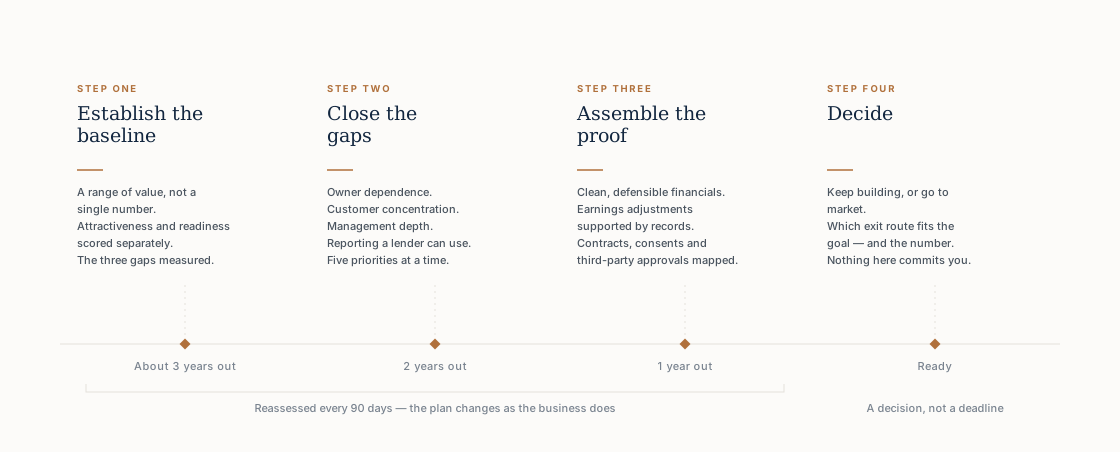
Three years is the working assumption, not a rule. Some gaps close in two quarters; a second layer of management takes longer than anyone wants it to.
Because most of what a buyer discounts for is structural, and structure changes slowly. Reducing owner dependence means someone else has to run things — for long enough that it's credible, not just true on the org chart. Diversifying away from one large customer means winning others. Financial statements built for the tax return have to be rebuilt into something a lender will underwrite, and then they need a track record.
None of that can be done during a sale process. By then the buyer is looking at the last three years of history, and the history is what it is.
Assuming the business is ready when it starts. A process launched before the materials hold up takes longer and ends lower, because the market only reads your story once.
Scroll the diagram sideways →
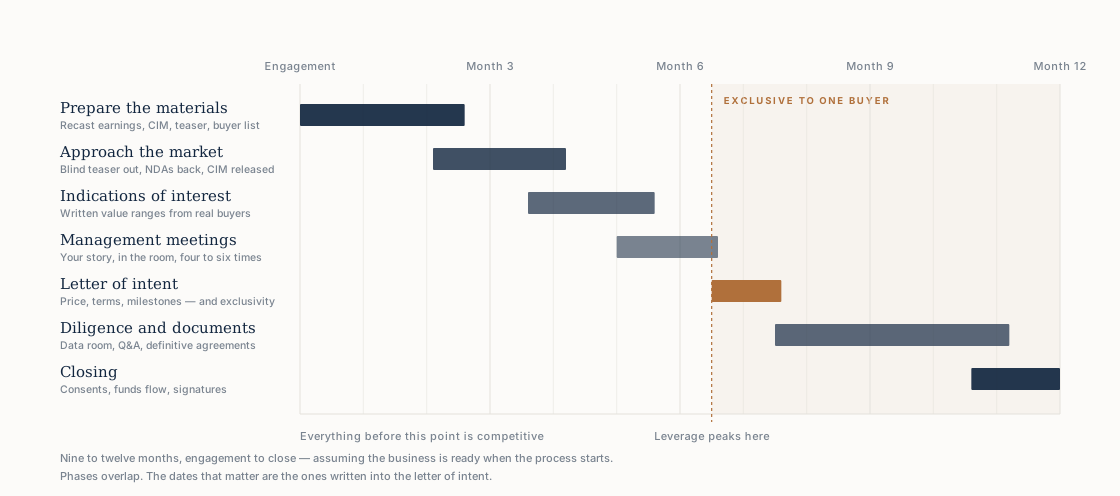
The shaded band matters. Signing a letter of intent grants one buyer exclusivity. Everything to the left of that line is competitive; everything to the right is a negotiation with a single counterparty who knows it.
Prepare the materials. Earnings are recast so the business is presented the way a buyer measures it rather than the way the tax return does. The confidential information memorandum gets built — history, operations, customers, competitive position, risks stated plainly, and growth a buyer could actually capture. A blind teaser is written so buyers can be approached without naming you. And the buyer universe gets researched properly rather than assembled from the four names you already know.
Approach the market. Teasers out, non-disclosure agreements back, memorandum released to the ones who signed. Your job during these weeks is to hit your numbers, because a soft quarter mid-process is expensive.
Indications of interest. Written value ranges, not prices. This is where you find out what the market thinks, from people spending their own money, rather than what a multiple you heard at a conference suggested.
Management meetings. Four to six sessions, spread over weeks. You tell the story. This is the heaviest stretch of your own time in the whole process, and it is not delegable — buyers are underwriting the business, but they're also reading you.
Letter of intent. Price, structure, the treatment of working capital, what your role looks like afterward, and the milestones that keep the timeline honest. Modern letters carry far more substance than they did a decade ago, which is why more gets negotiated here and less gets left to the definitive agreements.
Diligence and documents. Sixty to ninety days of verification running in parallel with lawyers drafting. The data room gets managed rather than dumped, discrepancies get found and resolved before the buyer finds them, and the seller's team stays on the same page about what has been said.
Closing. Third-party consents, landlord and lender approvals, funds flow, signatures. Deals slip here more often than owners expect, almost always because a consent nobody chased turns out to take six weeks.
Not price. Timing. Exclusivity runs long, the buyer takes another look at something they already saw, and the offer comes down at the point where you have no alternative bidder left in the room. Milestones written into the letter of intent — dates for the diligence list, the first draft agreement, the completion of financial and legal review — are the defense, because missing them ends exclusivity and puts the other buyers back in play.
Who does what
The most common question owners ask is how much of their own time this takes. The honest answer is that it's uneven — light for long stretches, and then very heavy twice.
Scroll the diagram sideways →
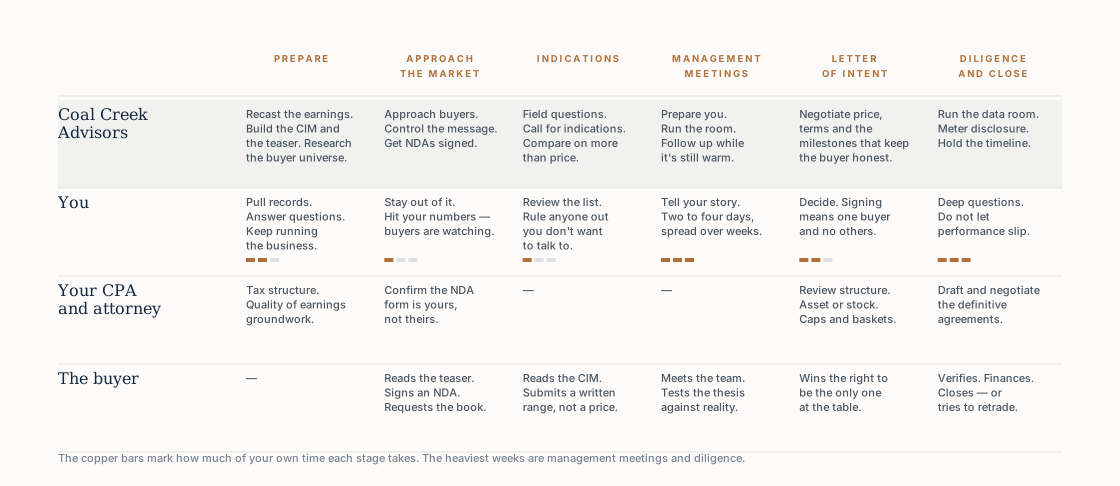
The lane that surprises owners is the third. Your CPA and attorney are largely idle through the middle of the process and then extremely busy at the end — which is why their availability is worth confirming before anything starts, not after a letter of intent is signed.
A well-run transition has four advisors in it: a CPA, an attorney, a financial advisor, and someone whose entire focus is the value of the business and the sequence of the process. Most owners have the first three and have never had the fourth — and the first three are each doing their own piece without anyone making sure the tax planning happens before the structure is agreed rather than after.
Somebody has to hold that. If it's you, you are running your own transaction while running the company that is being sold, during the one stretch when the company's performance is under a microscope. That is the single most common reason otherwise good processes go sideways.
How buyers narrow
The price at the end is set in the middle — by how many credible parties were still engaged when the letters of intent came in.
Scroll the diagram sideways →
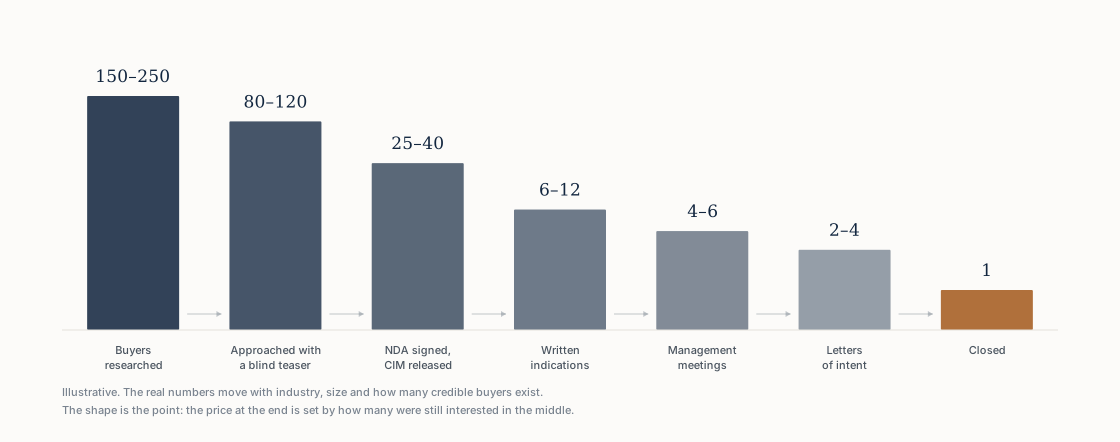
Every step down is a buyer deciding your business isn't for them. That is the process working, not failing — the ones left at the end are there because they want it.
Owners are often approached directly by a competitor or a private equity group and reasonably wonder whether they need a process at all. Sometimes the unsolicited buyer really is the right one. But you cannot know that without a market, and neither can they — which is why a single-buyer negotiation tends to settle somewhere near the buyer's opening view of value rather than the market's.
Different buyer types also value the same business differently. A strategic acquirer buying capability, a private equity group buying a platform, a searcher buying a job and an income, an internal management team buying continuity — these are not the same conversation, and they do not produce the same offer. Which of them is right for you depends on what you want out of it, and that is a conversation to have before the market sees anything.
Where the value is made
A good advisor will get you the best number the business can support. What the business can support is decided years earlier.
Scroll the diagram sideways →
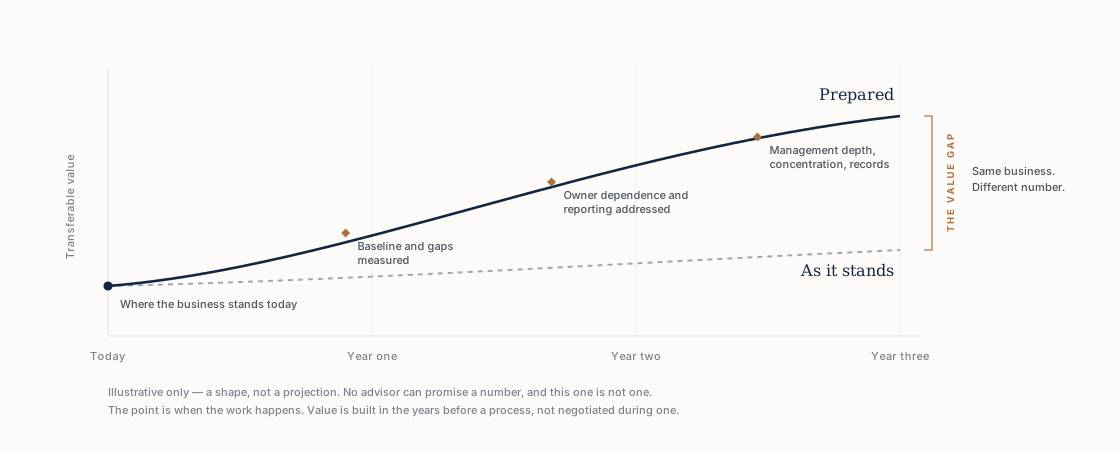
Both lines start in the same place. What separates them is three years of unglamorous work on risk — and no advisor, including this one, can promise you a number at the end of either.
This is the whole case for starting early, and it is not a sales argument so much as an arithmetic one. Two things set what a business sells for: what it earns, and the multiple the market applies to those earnings. Both are movable, and neither moves quickly. Earnings respond to how the business is run. The multiple responds to risk — how dependent the company is on you, how concentrated the customers are, how deep the management team goes, how much a buyer can trust the numbers.
Work on those and both terms improve at once, which is why the gap between the two lines widens rather than staying constant. Wait, and you are asking a process to recover value that a process cannot reach.
Thirty minutes, no cost, no pitch. Most owners come away knowing whether they're three years out or three months — and they're often surprised which.